The Ultimate Guide to Running in Chicago
**Lakefront Paths, Flat Speed, and Marathon City: Running in the Windy City**
Introduction: Running in America's Marathon City
Chicago earned its reputation as a running city through decades of cultivating world-class races, building exceptional infrastructure, and fostering a community that embraces running year-round despite brutal winters and sweltering summers. The Chicago Marathon ranks among the world's six major marathons, attracting 45,000 runners annually to one of the fastest courses on the planet. But the city's running culture extends far beyond race day.
The Lakefront Trail represents Chicago's crown jewel—an 18-mile paved path along Lake Michigan that provides uninterrupted running with skyline views, lake breezes, and perfectly flat terrain. This single trail would be enough to establish Chicago as a premier running destination. But the city offers much more: neighborhood routes through diverse communities, forest preserves on the outskirts, an elevated rail-trail through hip neighborhoods, and a running community that welcomes everyone from Olympic hopefuls to first-time 5K participants.
Chicago's geography creates ideal running conditions in ways that surprise people unfamiliar with the Midwest. The city sprawls across flat prairie land, making it one of America's flattest major cities. Elevation changes are measured in feet, not hundreds of feet. This topography allows runners to focus purely on pace and endurance without hills complicating workouts. Marathon runners flock here for training and racing, knowing the flat courses let them chase personal records.
The lake moderates temperatures year-round, keeping summer slightly cooler and winter slightly warmer than inland areas. The famous "lake effect" creates its own weather patterns—fog rolling in off the water, sudden temperature drops near the shore, and breezes that can help or hinder depending on direction. Runners learn to check conditions at the lakefront before heading out, knowing it might be 10 degrees cooler there than a mile inland.
The seasons define Chicago running more dramatically than in most cities. Summer brings humid heat that tests endurance and requires early morning starts. Fall delivers perfect running weather—crisp mornings, comfortable temperatures, and autumn colors in the city's many parks. Winter challenges runners with sub-zero temperatures, icy paths, and wind that cuts through layers. Spring arrives late but brings relief and renewed energy.
This guide explores Chicago's best running routes, seasonal strategies, the resources that support the city's running community, and the mindset that keeps runners moving through Chicago's extreme weather. Whether you're training for the marathon, exploring the city on foot, or looking to connect with the local running scene, Chicago offers opportunities that few cities can match.
The Iconic Routes: Chicago's Must-Run Paths
Lakefront Trail (18 miles)
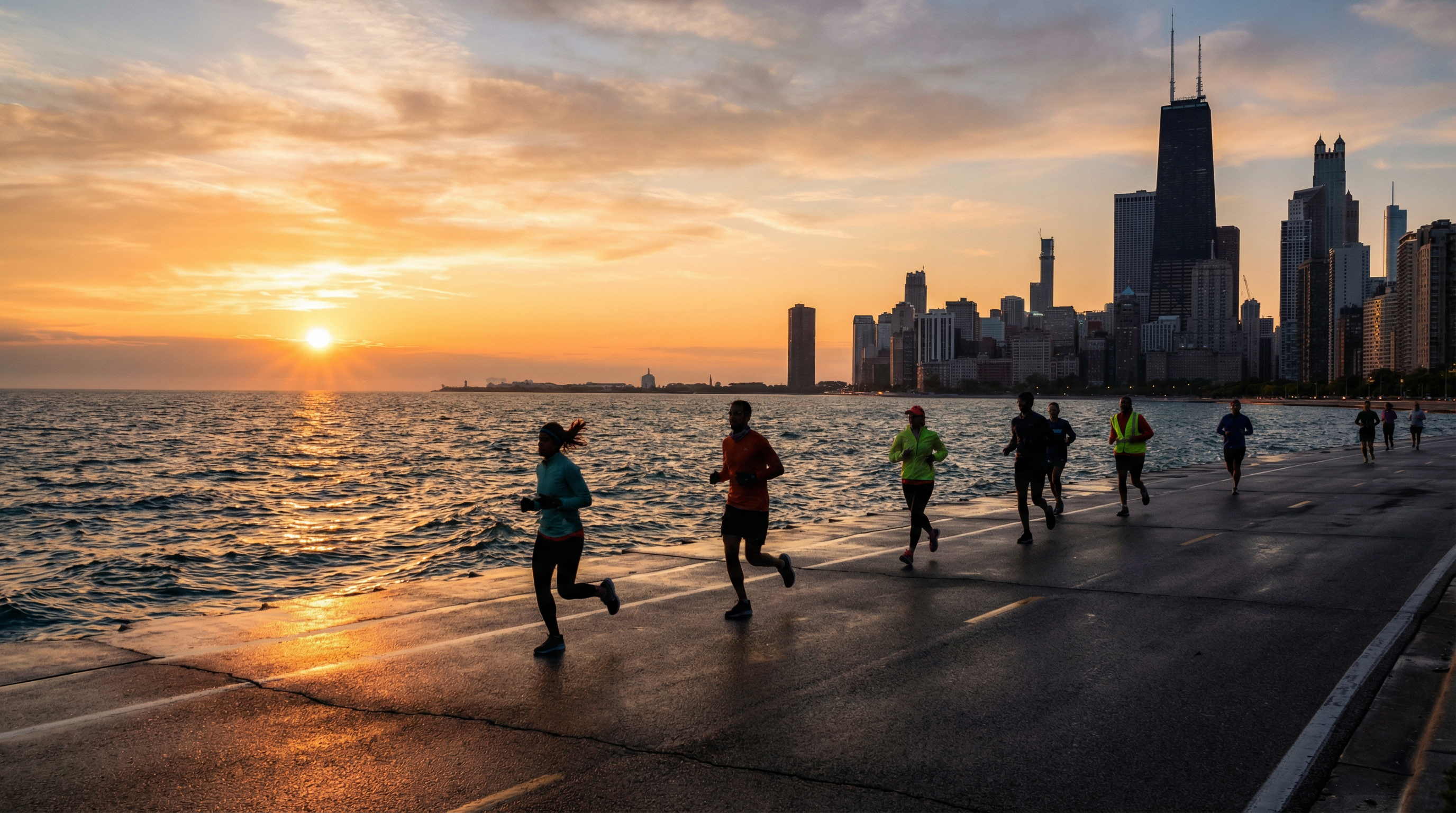
The Lakefront Trail defines Chicago running. This 18-mile paved path stretches from Ardmore Street on the north side to 71st Street on the south, hugging Lake Michigan's shoreline and providing the most scenic, convenient, and popular running route in the city. On any given day, thousands of runners, cyclists, and walkers share this path, creating a constant flow of activity.
The trail's northern section, from Hollywood Beach to Navy Pier, offers the most dramatic skyline views. As you run south, the downtown towers grow larger, their architecture creating a distinctive silhouette against the sky. The lake stretches endlessly to the east, its color changing with weather and light—steel gray on overcast days, brilliant blue when the sun shines, sometimes green with algae blooms in late summer.
The downtown section, from Navy Pier to Museum Campus, provides the most iconic Chicago running experience. Here, the trail runs directly along the water with the skyline rising immediately to the west. Runners pass Navy Pier, with its Ferris wheel and tourist crowds, then continue south past the Chicago Harbor and its marina full of sailboats. Grant Park and Millennium Park lie just west of the trail, with Buckingham Fountain visible from the path.
Museum Campus marks a transition point. The trail curves around the Field Museum, Shedd Aquarium, and Adler Planetarium, offering views back toward downtown. Soldier Field, home of the Chicago Bears, sits just west. Northerly Island, a former airport turned nature preserve, extends into the lake, creating a peninsula runners can explore on side trails.
The southern sections, from Museum Campus to Promontory Point and beyond, become quieter and more residential. The Hyde Park neighborhood, home to the University of Chicago, provides tree-lined streets and academic atmosphere. Promontory Point, a limestone peninsula jutting into the lake, offers 360-degree water views and a popular gathering spot for runners and picnickers.
The trail's flat terrain makes it perfect for any type of workout. Marathon runners log 18-mile point-to-point runs. Speed workouts happen along the straightaways. Easy runs benefit from the lake breeze and scenic distraction. The trail's popularity means you're never alone—help is always nearby if needed, and the constant activity creates safety through numbers.
But the crowds create challenges. Summer weekends see the trail packed with users, especially the downtown sections. Runners need to stay alert, calling out "on your left" when passing, and accepting that maintaining consistent pace requires navigation. Early morning runs (before 7 AM) offer the best experience—quiet paths, sunrise over the lake, and the city still waking up.
The trail gets plowed in winter, though ice can linger in shaded sections. The lake effect creates brutal wind conditions—running north into a headwind can feel like running through water. Smart runners check wind direction and plan routes accordingly, perhaps running north first (into the wind) while fresh, then enjoying the tailwind push on the return.
Local Tip: The trail has been separated into distinct paths for runners/walkers and cyclists, reducing conflicts. Water fountains and restrooms appear every mile or two. Multiple beach houses offer changing facilities. And the trail connects to public transit at numerous points, making it accessible from across the city.
The 606 Trail (2.7 miles)
The 606 represents Chicago's newest running asset—a 2.7-mile elevated trail built on a former rail line, connecting four neighborhoods (Wicker Park, Bucktown, Humboldt Park, and Logan Square) and providing a completely different running experience than the lakefront. Opened in 2015, the trail has quickly become a favorite for runners seeking an urban adventure.
The elevated perspective creates unique views. You run at second-story level, looking into apartments, over streets, and across neighborhoods. Street art covers many of the walls visible from the trail. The neighborhoods below represent some of Chicago's hippest areas—independent shops, craft breweries, ethnic restaurants, and a creative energy that defines modern Chicago.
The trail's design incorporates art installations, native plantings, and gathering spaces. The surface is smooth concrete, perfect for running. The grade is nearly flat (it's a former rail line, after all), though a few gentle slopes exist. The trail width accommodates runners, cyclists, and walkers, though it can feel crowded on nice-weather evenings and weekends.
The 606 works well for shorter runs or as part of a larger neighborhood loop. The 2.7-mile length means you can run out-and-back for 5.4 miles, or loop it multiple times. Many runners use it to connect to other routes—you can access Humboldt Park at the western end, or run through Wicker Park and Bucktown neighborhoods at the eastern end.
The trail has transformed the surrounding neighborhoods, spurring development and increasing property values. This gentrification creates mixed feelings among long-time residents. But for runners, the 606 provides safe, convenient access to neighborhoods that were previously less runner-friendly, opening up new route options.
Local Tip: The trail gets crowded from 5-8 PM on weekdays and all day on weekends. Early morning or late evening runs offer quieter experiences. The trail is well-lit, making it suitable for after-dark running. Access points appear every few blocks, allowing for easy entry and exit.
Lincoln Park Loop (5-6 miles)
Lincoln Park, Chicago's largest public park, offers multiple running options within its 1,200 acres stretching along the lakefront. The park combines lakefront trail sections with interior paths through gardens, past lagoons, and around playing fields, creating loops of various distances.
A popular 5-6 mile loop starts at North Avenue Beach, heads north along the lakefront trail to Fullerton, cuts west through the park past the Lincoln Park Zoo (free admission), circles the North Pond, then returns south through the park to North Avenue. This route provides variety—lakefront views, tree-lined paths, urban park atmosphere, and glimpses of the zoo's animals.
The park's interior paths offer softer surfaces than the lakefront trail. Crushed gravel and dirt paths wind through wooded areas, providing a more natural running experience despite the urban location. The lagoons attract birds—herons, ducks, and migratory species that stop during spring and fall migrations.
Lincoln Park works well for runners seeking shorter distances or those who want to avoid the lakefront crowds. The park's size means you can create numerous route variations. The zoo area can get crowded on weekends, but the northern sections near Montrose Harbor remain quieter.
The neighborhood surrounding Lincoln Park ranks among Chicago's most affluent, with beautiful architecture and tree-lined streets. Runners often extend their routes into these neighborhoods, adding miles through residential areas before returning to the park.
Local Tip: The park has excellent lighting on main paths, making it suitable for early morning or evening runs. The North Avenue Beach House offers restrooms and water fountains. Parking is available at multiple locations, though it fills quickly on nice-weather days.
Weather and Seasonal Strategies
Summer: Heat and Humidity
Chicago summers bring heat and humidity that challenge even experienced runners. July and August regularly see temperatures in the 80s and 90s, with humidity making it feel even hotter. The combination can be brutal, especially for runners training for fall marathons.
The lakefront provides relief—temperatures near the water run 5-10 degrees cooler than inland areas. Early morning runs (before 8 AM) offer the best conditions, with cooler temperatures and lower humidity. Evening runs can work, but the day's heat lingers, and humidity often increases as evening approaches.
Hydration becomes critical. The lakefront trail has water fountains every mile or two, but they're not always working. Carry water or plan routes that pass fountains you know are reliable. Electrolyte replacement matters on long runs—salt tablets or sports drinks help prevent cramping and maintain performance.
Heat acclimatization takes 10-14 days. If you're visiting Chicago in summer or returning after time away, expect the first week or two to feel harder than normal. Your body needs time to adapt to sweating more efficiently and maintaining core temperature. Don't push through heat exhaustion—it's dangerous and counterproductive.
Fall: Perfect Running Weather
Fall delivers Chicago's best running conditions. September through November brings comfortable temperatures (50s-70s), lower humidity, and crisp air that makes running feel effortless. This is marathon season in Chicago—the Chicago Marathon happens in October, and dozens of other races fill the fall calendar.
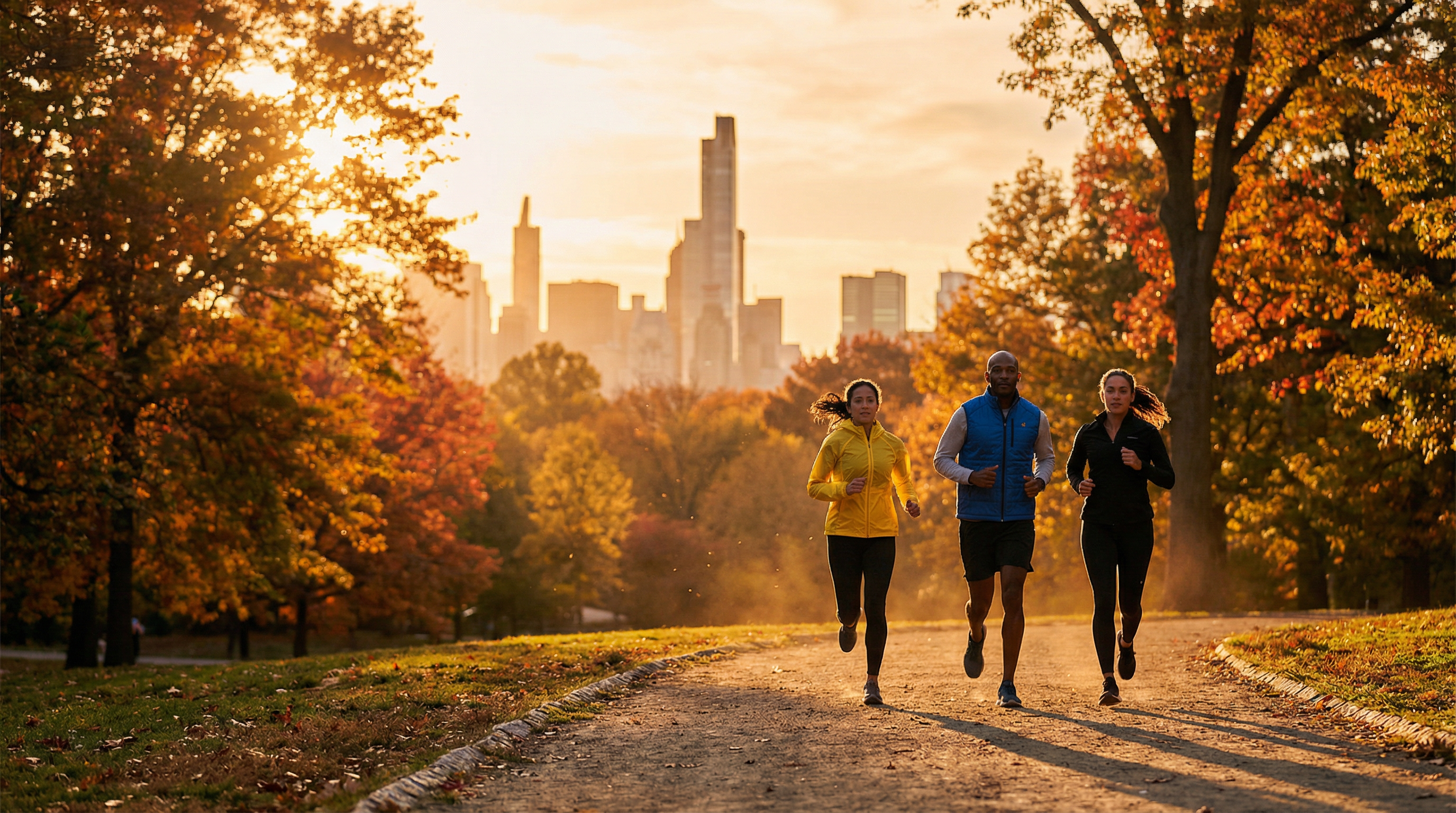
The fall colors enhance the running experience. Chicago's many trees create brilliant displays—maples turning red and gold, oaks shifting to brown and orange. The parks become particularly beautiful, with leaves carpeting the paths. Lakefront running offers views of the changing foliage against the blue water and skyline.
This is the season when Chicago runners log their best workouts. The comfortable conditions allow for sustained efforts without heat limiting performance. Morning runs don't require waiting for temperatures to drop. Evening runs happen in pleasant conditions. Every run feels easier than it did in summer.
But fall is short. By late November, winter arrives, bringing cold temperatures and the first snow. Runners learn to appreciate fall's perfection while it lasts, knowing the challenging months ahead.
Winter: The True Test
Chicago winters separate committed runners from fair-weather joggers. January and February regularly bring sub-zero temperatures, wind chills that make exposed skin dangerous, and snow that creates treacherous footing. Running in these conditions requires proper gear, smart planning, and mental toughness.
The lakefront trail gets plowed, but ice can linger, especially in shaded areas or where snow has melted and refrozen. Trail shoes with aggressive tread help, though some runners use traction devices (like Yaktrax) for extra grip. The lake effect creates brutal wind conditions—the open exposure means there's no escape from wind that can make 20 degrees feel like zero.
Layering becomes an art form. You want to start slightly cold, knowing you'll warm up after 10-15 minutes. Too many layers mean overheating and sweating, which can lead to hypothermia when you stop. A good rule: dress as if it's 15-20 degrees warmer than the actual temperature.
Cover extremities carefully. A warm hat or headband protects ears. Gloves or mittens keep fingers functional. A buff or face mask shields your face from wind. Sunglasses protect eyes from wind and glare off snow. Layers should be moisture-wicking, not cotton, which stays wet and loses insulating properties.
Many runners move indoors during the worst weeks—treadmills at gyms, indoor tracks at facilities like the UIC Pavilion. There's no shame in this. But dedicated outdoor runners find satisfaction in conquering Chicago winters, building mental toughness that translates to racing resilience.
Spring: Unpredictable Transition
Spring in Chicago is unpredictable. March through May can bring anything from 70-degree sunshine to snow to cold rain. The weather changes rapidly—a beautiful morning can turn into a cold, windy afternoon. Runners need flexible gear choices and realistic expectations.
This is the season for layers you can remove and tie around your waist. A long-sleeve shirt over a tank top, with a light jacket you can shed when you warm up. Gloves that fit in a pocket. A hat you can remove when the sun breaks through clouds.
Spring also brings rain. Chicago's precipitation is fairly evenly distributed through the year, but spring storms can be intense. Runners learn to check radar before heading out, or simply accept getting wet. A cap keeps rain off your face. A light rain jacket provides wind protection. Beyond that, you'll get wet, and that's okay.
The improving conditions create optimism. Each week brings slightly warmer temperatures, longer daylight, and the promise of summer ahead. Spring races—5Ks, 10Ks, half marathons—fill the calendar as runners shake off winter rust and test their fitness.
Running Culture and Community
Marathon City
Chicago's identity as a marathon city runs deep. The Chicago Marathon, held annually in October since 1977, has grown into one of the world's six major marathons (along with Boston, New York, London, Berlin, and Tokyo). The race attracts 45,000 runners and hundreds of thousands of spectators, shutting down major streets and creating a citywide celebration.
The course showcases Chicago's diversity, running through 29 neighborhoods and past iconic landmarks. Runners start and finish in Grant Park, with the route touring the North Side, West Side, and South Side before returning downtown. The flat, fast course has produced numerous world records and American records over the years.
But Chicago's marathon culture extends beyond the big race. Dozens of smaller marathons and half marathons happen throughout the year. The Shamrock Shuffle 8K in March kicks off the racing season. The Chicago Half Marathon in September serves as a tune-up for the full marathon. The Hot Chocolate 15K in November offers a sweet finish line experience.
Training groups proliferate in the months before major races. The Chicago Area Runners Association (CARA) offers structured training programs for marathons and half marathons, with coached workouts and long run support. Running stores host training teams. Online communities connect runners for group training runs.
The Social Running Scene
Chicago's running community embraces social running with enthusiasm. Nearly every neighborhood has a weekly group run, many ending at breweries or restaurants. These runs prioritize community over competition, welcoming runners of all paces and creating friendships that extend beyond running.
The November Project, a free fitness movement that started in Boston, has a strong Chicago presence. The group meets three times a week for workouts that combine running with bodyweight exercises, creating a supportive community that embraces all fitness levels. The energy and camaraderie attract hundreds of participants.
Running clubs range from competitive teams to purely social groups. The Chicago Endurance Sports (CES) focuses on triathlon and endurance training. The Divas Half Marathon & 5K series creates women-focused race experiences. The Front Runners welcome LGBTQ+ runners and allies. Neighborhood-specific clubs create local community.
The city's running stores—Fleet Feet, Dick Pond Athletics, Lululemon—serve as community hubs, hosting group runs, training programs, and social events. These stores employ knowledgeable staff who can recommend appropriate gear and connect runners with local resources.
Diversity and Inclusion
Chicago's running community reflects the city's diversity, though challenges remain. Organizations like Black Girls RUN! and Latino Runners create welcoming spaces for underrepresented groups. The Chicago Run program brings running to Chicago Public Schools, introducing thousands of children to running each year.
The city's neighborhood structure means running communities often develop along geographic and demographic lines. Efforts to create more inclusive, citywide community continue, with organizations working to make running accessible and welcoming to everyone regardless of race, income, or neighborhood.
Off the Beaten Path: Hidden Gems
Northerly Island (2-mile loop)
Northerly Island offers a surprising nature escape just minutes from downtown. This former airport, converted to a nature preserve in the early 2000s, features prairie restoration, wetlands, and a 2-mile loop trail with stunning skyline views.
The trail combines paved and crushed limestone surfaces, winding through prairie grasses and wildflowers. The southern tip of the island provides 360-degree views—the skyline to the north, the lake stretching east, and the Museum Campus to the west. The Adler Planetarium sits at the island's northern end, its distinctive dome visible throughout the run.
Northerly Island attracts fewer crowds than the main lakefront trail, despite being equally accessible. The nature preserve atmosphere feels removed from the city, even though you're surrounded by urban landscape. Birds populate the wetlands and prairie—herons, egrets, and numerous migratory species.
The island hosts outdoor concerts at the Huntington Bank Pavilion in summer, which can create crowds and parking challenges on event nights. But most days, the island offers quiet running with spectacular views. The loop works well for shorter runs or as an addition to lakefront trail mileage.
Busse Woods Forest Preserve (11-mile loop)
For runners seeking true trail running, Busse Woods Forest Preserve in the northwest suburbs offers an 11-mile crushed limestone loop around Busse Lake. This route provides a complete contrast to urban running—forest, lake views, and soft surfaces that feel gentle on joints.
The preserve features mature forest, wetlands, and prairie restoration. The trail winds through these varied landscapes, offering constantly changing scenery. Wildlife sightings are common—deer, foxes, coyotes, and numerous bird species. The loop includes some gentle hills (rare in Chicago), adding variety to the flat terrain most runners train on.
The 11-mile distance makes Busse Woods perfect for long training runs. Marathon runners use it for 20-milers, appreciating the soft surface and lack of traffic. The loop format means you're never far from the parking areas if you need to cut a run short.
The preserve gets busy on nice-weather weekends, with runners, cyclists, and walkers sharing the trail. Weekday mornings offer quieter experiences. The forest canopy provides shade in summer, making it cooler than exposed lakefront running. In fall, the changing leaves create beautiful scenery.
The Chicago Riverwalk (1.25 miles)
The Chicago Riverwalk, completed in 2016, transformed the Chicago River's south bank into a pedestrian promenade connecting Lake Michigan to Lake Street. The 1.25-mile path offers a completely different running experience—urban architecture, river views, and a glimpse into Chicago's history as a river city.
The Riverwalk runs below street level, creating an intimate perspective on the river and surrounding buildings. Architectural tours pass by on boats, their guides pointing out significant buildings. Kayakers paddle the river. Restaurants and cafes line the path, creating a lively atmosphere.
The short distance makes the Riverwalk better suited for shorter runs or as part of a larger downtown loop. Many runners combine it with the lakefront trail, creating a route that includes both river and lake views. The path can get crowded with tourists, especially in summer, but early morning runs offer quieter conditions.
The Riverwalk showcases Chicago's architectural heritage brilliantly. Running past buildings designed by legendary architects—the Wrigley Building, Tribune Tower, Marina City—creates an outdoor architecture tour. The bridges overhead, each with distinctive design, add to the visual interest.
The Lakefront Trail South Extension (3 miles)
The Lakefront Trail's southern extension, from 71st Street to the South Shore Cultural Center, offers a quieter alternative to the crowded northern sections. This 3-mile stretch runs through the South Side neighborhoods of South Shore and Jackson Park, providing local flavor and fewer crowds.
The trail passes through Jackson Park, site of the 1893 World's Columbian Exposition. The park's lagoons, wooded islands, and Japanese Garden create a peaceful setting. The Museum of Science and Industry sits at the park's northern edge, its massive building visible from the trail.
The South Shore Cultural Center, at the trail's southern terminus, occupies a former country club on the lakefront. The building's Mediterranean Revival architecture creates a distinctive landmark. The surrounding beach and park offer turnaround points for out-and-back runs.
This section of trail sees fewer runners than the downtown and North Side sections, despite offering equally good infrastructure and views. The South Side location means it's less convenient for many runners, but locals treasure it. The quieter paths allow for uninterrupted running and a more contemplative experience.
Running Resources
Running Stores
Chicago's running stores provide expert advice, quality gear, and community connections. **Fleet Feet** operates multiple locations throughout the city and suburbs, each hosting weekly group runs and training programs. Their staff provides gait analysis and shoe fitting services.
**Dick Pond Athletics**, a Chicago institution since 1972, offers extensive shoe selection and knowledgeable staff. The store hosts training programs for major races and maintains strong connections to the local running community. **Lululemon** stores in Lincoln Park and other neighborhoods host weekly run clubs, connecting runners with their community.
**Running Away Multisport** in the suburbs serves the triathlon and endurance sports community. **Naperville Running Company** and other suburban stores provide local community hubs outside the city center.
Post-Run Fuel
Chicago's food scene provides abundant options for runners seeking post-run fuel. **Yolk**, with multiple locations, offers breakfast and brunch with healthy options and generous portions. **Wildberry Pancakes and Cafe** serves massive pancakes and egg dishes that satisfy hungry runners.
**Protein Bar & Kitchen** locations throughout the city provide healthy fast-casual options—grain bowls, salads, and smoothies. **Jamba Juice** and **Smoothie King** offer recovery drinks. **Whole Foods** and **Mariano's** grocery stores stock recovery drinks, energy bars, and healthy snacks.
Coffee culture thrives in Chicago, with excellent cafes near popular running routes. **Intelligentsia Coffee**, **Metropolis Coffee**, and **Dark Matter Coffee** offer high-quality coffee perfect for post-run socializing. Many runners have regular post-run coffee spots where they meet friends and discuss training.
Sports Medicine
**Rush University Medical Center** operates a sports medicine program specializing in running injuries. **Northwestern Medicine** provides similar services. Both health systems employ doctors and physical therapists who understand running-specific issues and work to keep runners training when possible.
**ATI Physical Therapy** and **Athletico** operate multiple locations throughout the city, offering convenient access to physical therapy. Many therapists specialize in running injuries and provide gait analysis, strength training programs, and treatment plans.
**Chicago Sports & Wellness** focuses specifically on endurance athletes, offering physical therapy, massage, and performance services. **The Runners High** provides massage therapy specializing in sports massage for runners.
Safety and Practical Tips
Staying Safe
Chicago is generally safe for runners, especially on the lakefront trail and in popular parks. The constant foot traffic creates safety through numbers. But standard urban precautions apply—stay aware of your surroundings, avoid isolated areas after dark, carry identification and a phone.
The lakefront trail has good lighting on most sections, making early morning and evening running feasible. The 606 is well-lit and sees regular use even after dark. Neighborhood runs require more awareness, especially in less-trafficked areas. Running with a partner or group increases safety.
Weather creates its own safety considerations. Summer heat and humidity can cause heat exhaustion or heat stroke—know the warning signs and don't push through dangerous symptoms. Winter cold creates hypothermia and frostbite risk—cover exposed skin and know when conditions are too dangerous for outdoor running.
Getting Started
New runners or visitors to Chicago should start with the lakefront trail. The infrastructure, scenery, and constant activity make it ideal for first runs. Start with shorter distances and gradually explore further north or south as you build fitness and familiarity.
Join a running club or group run to meet other runners and learn local routes. CARA, the city's largest running organization, offers programs for all abilities. Running store group runs provide weekly opportunities to connect with the community. The social aspect makes running more enjoyable and provides built-in accountability.
Invest in appropriate gear for Chicago's extreme weather. Summer requires moisture-wicking clothing and sun protection. Winter demands layers, wind protection, and coverage for extremities. Good running shoes suited to your gait prevent injuries. And lights/reflective gear are essential for low-light running.
Conclusion: The Chicago Running Experience
Running in Chicago means embracing extremes—brutal winters and humid summers, crowds on the lakefront and quiet in the neighborhoods, flat speed and urban grit. The city challenges runners with its weather while rewarding them with world-class infrastructure, a supportive community, and the satisfaction of running in one of America's great cities.
The lakefront trail alone would make Chicago a premier running destination. Add the 606, the parks, the neighborhood routes, and the marathon culture, and you have a city that takes running seriously. Chicago runners develop toughness from training through winter, speed from the flat terrain, and community from the shared experience of pursuing running goals in a city that celebrates the sport.
Whether you're training for the Chicago Marathon, exploring the city on foot, or simply looking for a great place to run, Chicago delivers. The infrastructure is there. The community is welcoming. And the running opportunities are exceptional. Just be prepared for the weather—it's part of what makes running in Chicago memorable.